
Interests: Building, Helping, Thinking
Career Cluster: Health Sciences
Education Level: Bachelor’s Degree
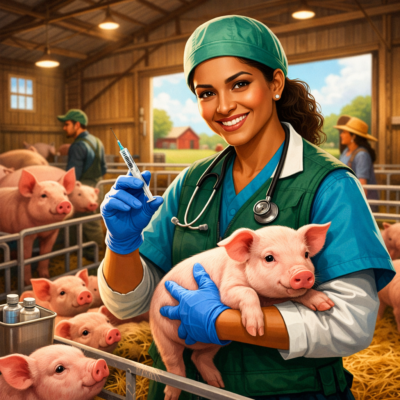
Veterinarians diagnose, treat, and prevent illnesses in animals by providing medical and surgical treatment, ensuring their health and well-being. They may also provide advice to pet owners, farmers, or organizations on animal care.
What is a typical day as a Veterinarian?
– Examining animals to diagnose health issues.
– Administering vaccinations, medications, and treatments.
– Performing surgeries and wound care on injured animals.
– Advising pet owners or farmers on nutrition, care, and disease prevention.
What else might they be expected to do?
– Conduct diagnostic tests like blood work, x-rays, and ultrasounds.
– Inspect and certify livestock for disease-free status in farming or trade.
– Monitor and manage animal births, particularly in livestock settings.
– Contribute to research on animal diseases and public health issues.
What type of training is needed for this career path?
-A degree in Veterinary Medicine from an accredited institution is required.
– Licensing by a veterinary board or council, such as the Kenya Veterinary Board, is mandatory to practice.
– Specializations in areas like surgery, animal behavior, or public health can enhance career opportunities.
What kind of personality is needed to excel in this career path?
– Compassionate, detail-oriented, and patient individuals excel in this role.
– Big 5 Traits: High agreeableness, conscientiousness, and emotional stability.
– Myers-Briggs Types: ISFJ (supportive and meticulous) or ENFP (empathetic to animals and adaptable to changing work environments and situations).
What kind of interests do people in this career path have?
– Interest in diagnosing and solving animal health problems. (Investigative)
– Preference for hands-on work with animals and equipment. (Building)
– Desire to help animals and educate owners or stakeholders. (Helping)
Are there any innate skills or aptitudes required?
– Manual Dexterity
– Compassion and Empathy
– Problem-Solving Ability
– Attention to Detail
What challenges can I expect to face if I pursue this career path?
– Handling emotional stress from treating severely ill or injured animals.
– Managing long and irregular work hours, especially in emergencies.
– Navigating financial constraints of clients who may struggle to afford care.
What are the job prospects for this path in Kenya and Africa? What about International prospects for a Kenyan citizen?
-Kenya and Africa: Veterinarians are in demand in agriculture, wildlife conservation, and urban pet care. Growth in agribusiness and public health also boosts opportunities.
– International: Veterinarians with advanced training or specializations are competitive for roles in wildlife conservation, research, and global animal health organizations.
What should I focus on if I choose to pursue this career?
– Develop strong diagnostic, surgical, and communication skills.
– Gain experience in different settings, such as farms, clinics, or conservation areas.
– Stay informed about emerging diseases and advancements in veterinary medicine.
Which other careers or job roles can I progress to?
– Veterinary Surgeon
– Animal Behaviour Specialist
– Wildlife Biologist
– Public Health Officer