
Interests: Building, Creating, Thinking
Career Cluster: Healthcare and Medicine
Education Level: Bachelor’s Degree, Master’s Degree
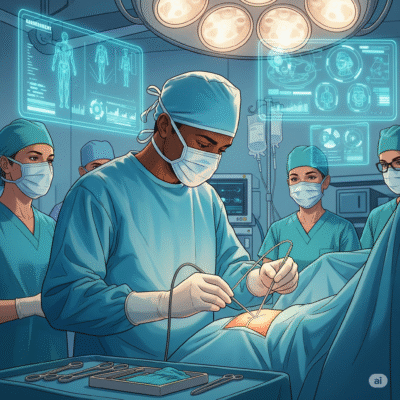
A plastic surgeon is a medical doctor who specializes in performing surgical procedures to enhance or alter a person’s appearance. These procedures may include reconstructive surgery to repair physical defects caused by birth defects, trauma, burns, or disease. Plastic surgeons may also perform cosmetic surgery, which involves altering the appearance of a person’s face or body to improve their aesthetic appeal.
What is a typical day as a Plastic & Reconstructive Surgeon?
– Plastic surgeons meet with patients to discuss their aesthetic goals or reconstructive needs.
– They evaluate patients’ medical history, perform physical examinations, and provide personalized recommendations for surgical or non-surgical treatment options.
– Perform a variety of surgical procedures to enhance or reconstruct different parts of the body.
– Prior to surgery, plastic surgeons educate patients about the procedure, including potential risks and benefits, and ensure they have realistic expectations.
– They may order preoperative tests, prescribe medications, and provide instructions for preoperative care to optimize surgical outcomes.
– Provide comprehensive postoperative care to monitor patients’ recovery and address any complications that may arise.
– They follow up with patients regularly to assess healing progress, remove sutures or dressings as needed, and provide guidance on postoperative care instructions and activity restrictions.
What else might they be expected to do?
– In addition to surgical interventions, plastic surgeons may offer non-surgical cosmetic treatments
– Work closely with other medical specialists to provide comprehensive care for patients with complex medical or surgical needs.
– They may participate in clinical trials, publish research articles, and present findings at medical conferences to contribute to the body of knowledge in the field.
What type of training is needed for this career path?
– Be a licensed Medical Doctor by completing a Bachelor of Medicine and Bachelor of Surgery degree and 1 year Internship
– Pursue a Master of Medicine in Plastic & Reconstructive Surgery
– Complete 2 years supervised post training practice.
– Surgeons may pursue further sub-specialized training (fellowships).
What kind of personality is needed to excel in this career path?
– Attention to detail: Ensuring precision in surgical procedures.
– Empathy: Understanding patient needs and concerns.
– Resilience: Handling the physical and emotional demands of surgery.
– Teamwork: Collaborating with other healthcare professionals.
– Adaptability: Staying updated with evolving surgical techniques and technologies.
What kind of interests do people in this career path have?
-Engaging in hands-on problem-solving and physical activities.
– Analyzing complex information to diagnose and treat conditions.
– Applying creativity to reconstructive and aesthetic procedures(Artistic)
Holland Codes: Thinking (T), Building (B) and Artistic (A).
Are there any innate skills or aptitudes required?
– High Spatial aptitude: Ability to visualize body parts, mentally rotating them, and understanding how they fit together or interact.
– Strong hand-eye coordination and manual dexterity
– Emotional resilience and ability to work under pressure
– Excellent problem-solving and decision-making skills
What challenges can I expect to face if I pursue this career path?
– Resource limitations: Especially in rural or underfunded healthcare settings.
– Long and repeated surgical procedures for burns patients and complicated reconstruction.
– Public misconceptions: Dealing with the perceived vanity of cosmetic surgery.
– Dealing with the psychological aspect of both cosmetic and reconstructive surgery.
– Continuous learning: Keeping pace with advancements in surgical techniques.
What are the job prospects for this path in Kenya and Africa? What about International prospects for a Kenyan citizen?
– Kenya & Africa: Growing demand due to increasing awareness of reconstructive and aesthetic procedures. Opportunities in hospitals, private clinics, and academic institutions. .
– International: -Potential roles in global health organizations, research collaborations, and advanced clinical settings.
What should I focus on if I choose to pursue this career?
– Develop your spatial awareness by sketching and playing visual puzzles/chess
– Subject selection must include Biology and Chemistry, Math or Physics at senior school level.
– High grade requirement for all Medical programs locally and abroad.
– Gain exposure by volunteering at Healthcare facilities to ascertain interest
Which other careers or job roles can I progress to?
– Burn Specialist
– Cosmetic Surgeon
– Craniofacial Oncologist & Reconstructive Surgeon
– Hand Surgeons
– Microvascular Surgeon
– Wound Care Specialist