
Interests: Building, Helping, Thinking
Career Cluster: Healthcare and Medicine
Education Level: Bachelor’s Degree, Master’s Degree
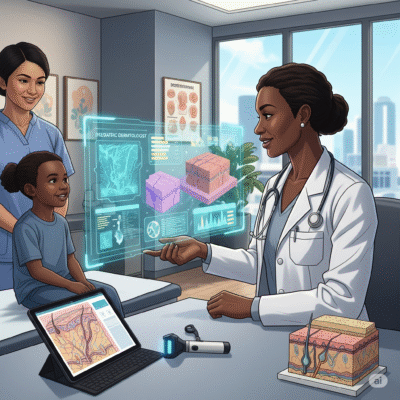
Paediatric dermatologists specialize in treating skin conditions in infants, children, and adolescents. Common conditions they treat include eczema, acne, birthmarks, and rashes.
What is a typical day as a Paediatric Dermatologist?
– Conducting clinical evaluations and diagnosing skin conditions.
– Prescribing and managing treatment plans.
– Collaborating with other healthcare professionals for comprehensive care.
– Engaging in research and staying updated with advancements in dermatology.
What else might they be expected to do?
– Morning rounds in hospitals or clinics.
– Reviewing laboratory and biopsy results.
– Participating in multidisciplinary team meetings.
– Teaching medical students or residents.
What type of training is needed for this career path?
– Complete a Bachelor of Medicine and Bachelor of Surgery from a recognized institution and one-year internship.
– Enroll in a Master of Medicine program in Dermatology (4 years) or Paediatrics & Child Health (3 years) .
– Subspecialty Training: Pursue 1 year fellowship program in Paediatric Dermatology.
What kind of personality is needed to excel in this career path?
– Empathy: Understanding and compassion for young patients and their families.
– Attention to Detail: Meticulous observation skills for accurate diagnosis.
– Patience: Ability to handle the challenges of treating children.
– Analytical Thinking: Critical assessment of symptoms and test results.
What kind of interests do people in this career path have?
– Extensive studying and research, diagnostic analysis (Thinking)
– Hands-on problem-solving (Building)
– Assisting and caring for others (Helping)
Holland Codes: Thinking (I), Helping (S) and Building (R).
Are there any innate skills or aptitudes required?
– Strong Communication: Effectively interacting with children and guardians.
– Concern for others: being sensitive to others’ needs and feelings and being understanding and helpful on the job.
What challenges can I expect to face if I pursue this career path?
– Resource Limitations: Limited access to specialized equipment in some regions.
– Workforce Shortage: Few trained specialists leading to high demand.
– Continuous Learning: Keeping up with evolving medical knowledge.
What are the job prospects for this path in Kenya and Africa? What about International prospects for a Kenyan citizen?
– Kenya & Africa: Growing need for specialists due to high prevalence of skin conditions and limited number of dermatologists
– International: Opportunities in global health initiatives and research collaborations.
What should I focus on if I choose to pursue this career?
– Subject selection must include Biology and Chemistry, Math or Physics at senior school level.
– High grade requirement for all Medical programs locally and abroad.
– Gain exposure by volunteering at Healthcare facilities and at Child Care facilities to ascertain interest.
Which other careers or job roles can I progress to?
– Immunodermatologist
– Head of Dermatology Department
– Health Policy Advisor
– Pediatric Allergy and Immunology
– Pediatric Rheumatology