
Interests: Building, Helping, Organizing
Education Level: Bachelor’s Degree
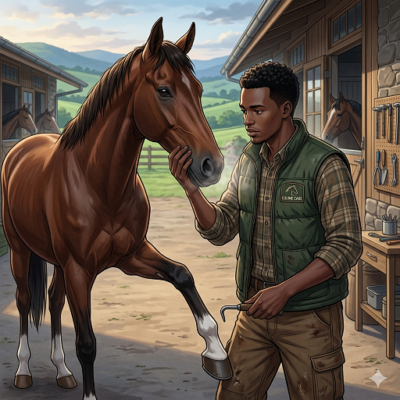
Equine specialists care for horses by ensuring their physical health, grooming, and training needs are met. They may work in stables, training facilities, or veterinary settings.
What is a typical day in as an Equine Specialist?
Feeding and watering horses according to their dietary needs.
Grooming horses and maintaining their hooves or arranging for farrier services.
Exercising horses and training them for specific disciplines.
Monitoring horses for signs of illness or injury and administering basic care.
What else might they be expected to do?
Assist veterinarians during medical examinations or treatments.
Maintain stables, equipment, and riding areas to ensure safety and cleanliness.
Provide advice to horse owners on proper care and training techniques.
Transport horses to events, competitions, or veterinary facilities.
What kind of interests do people in this career path have? (based on RIASEC/Holland Codes)?
Realistic (R): Enjoy hands-on work with horses and their environments.
Social (S): Passion for helping animals and educating owners.
Investigative (I): Interest in understanding horse behavior and health.
What type of training is needed for this career path?
A diploma or degree in Equine Studies, Animal Science, or Veterinary Technology is beneficial but not necessary.
Practical experience in horse care, riding, or training is essential and therefore, an apprenticeship would be a more suitable training method.
Certifications in equine first aid, riding instruction, or farriery can enhance career prospects.
What kind of personality is needed to excel in this career path?
Patient, observant, and physically fit individuals excel in this role.
Big 5 Traits: High agreeableness, conscientiousness, and emotional stability.
Myers-Briggs Types: ISFP (empathetic and practical) or ESTP (energetic and hands-on).
What challenges can I expect to face if I pursue this career path?
Managing physically demanding tasks like lifting or restraining horses.
Handling safety risks associated with unpredictable horse behavior.
Navigating the emotional challenges of working with injured or ill animals.
What are the job prospects for this path in Kenya and Africa? What about International prospects for a Kenyan citizen?
Kenya and Africa: Opportunities exist in equestrian centers, race tracks, and farms. The growing interest in equestrian sports in urban areas further boosts demand.
International: Certified and experienced equine specialists are competitive for roles in countries with established equestrian industries, such as the U.S., U.K., or Australia.
What should I focus on if I choose to pursue this career?
Gain hands-on experience with horse care, training, and stable management.
Develop expertise in equine health, behavior, and nutrition.
Build strong communication skills to educate horse owners and collaborate with veterinarians.
Which other careers or job roles can I progress to?
Equine Trainer
Veterinary Technician (Equine)
Stable Manager
Equine Rehabilitation Specialist