
Interests: Building, Helping, Thinking
Career Cluster: Healthcare and Medicine
Education Level: Bachelor’s Degree, Master’s Degree
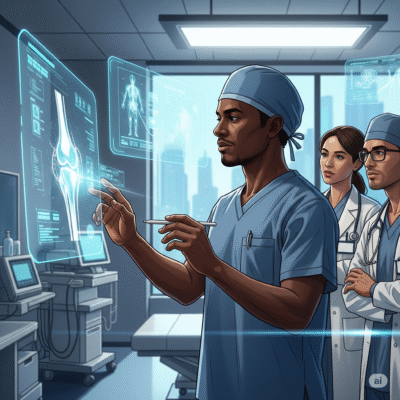
Orthopedic surgeons specialize in diagnosing, treating, and performing surgery on the musculoskeletal system, which includes bones, joints, ligaments, tendons, and muscles.
What is a typical day as an Orthopedic Surgeon?
– Conducting patient consultations to assess musculoskeletal conditions.
– Interpreting diagnostic tests such as X-rays, MRIs, and CT scans.
– Performing surgical procedures like joint replacements, fracture repairs, and corrective surgeries.
– Collaborating with multidisciplinary teams, including physical therapists and radiologists, to develop comprehensive treatment plans.
– Engaging in research to advance orthopedic practices.
– Morning rounds to check on post-operative patients.
Read More: Day in the life of a Kenyan Orthopedic Surgeon
What else might they be expected to do?
– Participate in teaching medical students and residents.
– Contribute to medical research and publications.
– Attend and present at professional conferences.
– Engage in hospital or clinic administrative roles.
What type of training is needed for this career path?
– Successful completion of Bachelor of Medicine and Bachelor of Surgery plus 1-year internship.
– Master of Medicine in Orthopedic Surgery (4 years) plus 2 years supervised practice.
What kind of personality is needed to excel in this career path?
– Detail-oriented and methodical in approach.
– Comfortable interacting with patients and leading surgical teams.
– Emotional Stability: Ability to handle high-stress situations calmly.
– Openness to unstructured schedules and frequent emergency situations.
What kind of interests do people in this career path have?
– Extensive studying and researching required for diagnosing complex conditions and staying updated with medical research (Thinking)
– Performing hands-on surgical procedures and utilizing medical tools (Building)
– Orthopedic care involves interacting with patients, explaining procedures, and providing support. (Helping)
Holland Codes: Thinking (I), Building (R) and Helping (S) .
Are there any innate skills or aptitudes required?
– Excellent hand-eye coordination and manual dexterity.
– Strong spatial awareness and understanding of anatomy.
– Critical thinking and problem-solving abilities.
– Physical stamina to endure long surgeries.
What challenges can I expect to face if I pursue this career path?
– Managing high-stress environments and critical situations.
– Keeping up with rapid advancements in surgical techniques and technologies.
– Balancing demanding work hours with personal life.
– Resource limitations, especially in public healthcare settings.
What are the job prospects for this path in Kenya and Africa? What about International prospects for a Kenyan citizen?
– Kenya & Africa: There is unmet demand for Orthopedic Surgeons due to high prevalence of traffic accidents and musculoskeletal disorders. However, there is more opportunity in rural areas.
– International: Globally, the demand for Orthopedic Surgeons is expected to continue rising due to increase in aging populations as well as growth of Sports Medicine. However, not all countries will recognise surgeons trained in Kenya.
What should I focus on if I choose to pursue this career?
– Subject selection must include Biology and Chemistry, Math or Physics at senior school level.
– High grade requirement for all Medical programs locally and abroad.
– Gain exposure by volunteering at Healthcare facilities to ascertain interest
– Start developing interest in how the body moves.
Which other careers or job roles can I progress to?
– Spine Surgery
– Pediatric Orthopedics
– Sports Medicine
– Orthopedic Department Head
– Orthopedic Device/Technology Specialist