
Career Cluster: Education and Training
Education Level: Bachelor’s Degree
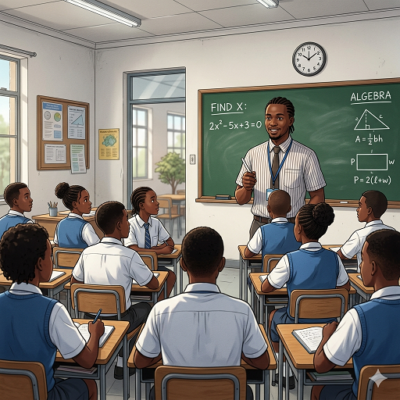
High school teachers (also known as secondary school teachers) educate students aged approximately 14–18 years. They specialize in specific subjects such as mathematics, biology, languages, history, or physics. Their main role is to prepare students for national exams and future academic or career paths.
What is a typical day for a High School Teacher?
-Delivering subject-specific lessons based on the curriculum
– Preparing teaching materials and schemes of work
– Assessing student performance through tests and assignments
– Offering remedial or extra help to struggling students
– Supervising co-curricular activities (e.g., sports, clubs)
– Attending department and school-wide meetings
What else might they be expected to do?
– Mentor students (career guidance or discipline)
– Participate in curriculum development (CBC in Kenya)
– Organize school events, educational trips
– Act as class teachers or heads of department
What type of training is needed for this career path?
– Bachelor of Education (Arts or Science) – subject specialization required
– OR Bachelor’s Degree in a subject + Post Graduate Diploma in Education (PGDE)
– Must be registered by the Teachers Service Commission (TSC)
– KCSE Requirement: Minimum of C+ and a C+ in two teaching subjects
What kind of personality is needed to excel in this career path?
– Strong communicator
– Patient and empathetic
– Analytical and organized
– Passionate about youth development
What kind of interests do people in this career path have?
– Planning lessons, structuring academic goals (Organizing)
– Subject mastery, academic problem-solving (Thinking)
– Guiding and nurturing students (Helping)
Holland Codes: Organizing(O), Thinking (T) and Helping (H)
Are there any innate skills or aptitudes required?
– Subject mastery and confidence in content delivery
– Classroom management
– Emotional intelligence
– Multitasking and time management
What challenges can I expect to face if I pursue this career path?
– Managing large class sizes – 40+ students per class
– Student behavior or emotional issues especially at adolescent stage.
– Pressure of exam performance
– Limited teaching resources in public and low-income private schools
What are the job prospects for this path in Kenya and Africa? What about International prospects for a Kenyan citizen?
Kenya and Africa: High unemployment rate due to poor budgetary allocation by the government, which is also the biggest employer.
International: International schools across Africa and the Middle East (e.g. UAE, Qatar) through the Government’s Mwalimu Majuu project. With added certification (e.g., PGCE for UK, state certification for US/Canada), teachers can qualify to work in Western countries. Online international teaching platforms (especially for IGCSE/IB curriculum) can also be considered.
What should I focus on if I choose to pursue this career?
– Strategic subject expertise – some subjects have a higher absorption rate than others.
– Continuous professional development (especially CBC training)
– Basic IT skills for digital teaching
– Student mentorship and emotional support
Which other careers or job roles can I progress to?
– Head of Subject/Department
– Deputy Principal or Principal
– Curriculum Developer (e.g., KICD)
– Education Policy Maker or Officer
– Teacher Trainer