
Interests: Building, Creating, Organizing
Career Cluster: Construction and Manufacturing, Trades
Education Level: College Certificate/Diploma
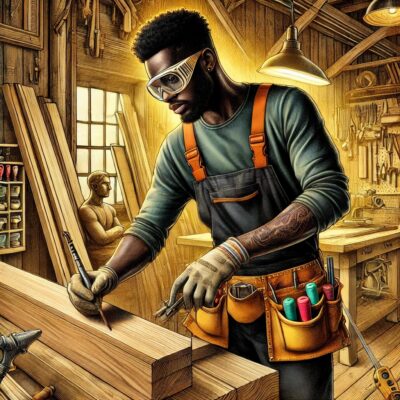
Carpenters construct, repair, and install wooden structures and fixtures, ranging from furniture and cabinetry to frameworks for buildings. They use a variety of tools and techniques to create functional and aesthetically pleasing products.
What is a typical day as a Carpenter?
– Reading and interpreting blueprints or technical drawings for construction projects
– Measuring, cutting, and assembling wood, plywood, and other materials
– Installing frameworks, doors, windows, and other wooden components
– Repairing damaged wooden structures or furniture to restore functionality.
What else might they be expected to do?
– Collaborate with architects, engineers, or contractors to ensure precision and quality
– Create custom furniture or decorative wooden features for interiors
– Use advanced tools like CNC machines for intricate designs or mass production
What type of training is needed for this career path?
– A technical diploma or certificate in carpentry, joinery, or woodworking is required.
– On-the-job training or apprenticeships provide essential hands-on experience.
– Certifications in specialized carpentry techniques, such as cabinetry or restoration, enhance career prospects.
What kind of personality is needed to excel in this career path?
– Practical, detail-oriented, and creative individuals excel in this role.
– Big 5 traits: Conscientiousness and Openness.
– Myers-Briggs types: ISTP or ISFP often align with this career.
What kind of interests do people in this career path have?
– Passion for working with materials to create functional or artistic pieces (Realistic and Artistic traits).
– Interest in craftsmanship, design, and problem-solving.
– Interests & Aptitude: Realistic (R), Artistic (A), and Conventional (C)
Are there any innate skills or aptitudes required?
– Strong hand-eye coordination and attention to detail for precise construction
– Creative problem-solving skills to address unique project requirements
– Knowledge of safety standards and woodworking techniques
What challenges can I expect to face if I pursue this career path?
– Managing physically demanding tasks, such as lifting or working in awkward positions
– Meeting tight deadlines while maintaining quality and precision
– Keeping up with advancements in tools, techniques, and materials
What are the job prospects for this path in Kenya and Africa? What about International prospects for a Kenyan citizen?
– Kenya and Africa: Carpenters are in high demand for residential, commercial, and industrial construction projects. Opportunities also exist in furniture manufacturing and interior design.
– International: Skilled Kenyan carpenters with expertise in advanced techniques can access roles in global markets, including restoration projects and custom furniture design.
What should I focus on if I choose to pursue this career?
– Master advanced techniques like joinery, cabinetry, or carving.
– Build practical experience through apprenticeships or internships in construction or manufacturing.
– Develop skills in using modern tools and equipment, including CNC technology.
Which other careers or job roles can I progress to?
– Furniture Designer or Maker
– Construction Foreman or Project Manager
– Cabinetmaker or Joiner Specialist
– Trainer or Instructor in Carpentry Techniques
– Consultant for Woodworking or Construction Projects